Sam Simon · 20 October 2026
The Unseen Effects of Sequential Content Delivery on Sustained User Interaction in Specialized Web Platforms
Specialized web platforms have adopted sequential content delivery as a core mechanism for structuring user access to materials, and researchers continue to examine how this approach influences long-term participation patterns. Platforms release modules, articles, or resources in timed sequences rather than all at once, which creates a structured progression that users follow across multiple sessions. Data from platform analytics collected through 2025 indicate measurable shifts in session duration and return frequency when content arrives in this staggered format.
Defining Sequential Content Delivery in Niche Environments
Sequential delivery operates through scheduled releases that unlock new sections only after prior ones receive completion markers or time thresholds pass. Educational resource sites, professional forums, and topic-specific communities apply this model to maintain a steady flow of new material without overwhelming users at login. Observers note that the method differs from bulk uploads because it ties interaction metrics directly to release cadences, with backend systems tracking progress at each stage. In October 2026 several mid-sized platforms reported adjustments to release intervals based on aggregated user path data spanning the previous twelve months.
Measured Impacts on Return Rates and Session Depth
Studies tracking user cohorts across specialized platforms show that sequential releases correlate with higher repeat visit counts compared to immediate full access. One analysis of community resource hubs found average return intervals shortened by several days when new segments appeared on fixed schedules. Session depth also changed, as users revisited earlier sections while awaiting later ones, producing layered navigation patterns that analytics tools captured through clickstream records. Figures from these datasets reveal sustained interaction extending beyond the initial discovery phase, though the strength of the effect varied by topic complexity and user cohort size.
Platform operators have documented cases where staggered delivery prompted users to set calendar reminders for upcoming releases, an action logged through notification engagement rates. This behavior appeared more frequently in professional development networks than in casual hobby forums, suggesting topic relevance plays a role in how sequences shape routines. Researchers examining these patterns emphasize that the data reflect observed behaviors rather than causation claims, with external factors such as topic timeliness also influencing outcomes.
Role of Notification Systems and Progress Indicators
Integrated notification tools amplify the reach of sequential releases by alerting users at each unlock point. Metrics collected from platforms using automated alerts demonstrate elevated click-through rates on these messages during the first forty-eight hours after distribution. Progress bars and completion trackers further support continued interaction by displaying advancement through the sequence, which users reference during return visits. Data compiled by academic teams at institutions in North America and Europe indicate that platforms combining both features recorded steadier participation curves across multi-week observation windows.
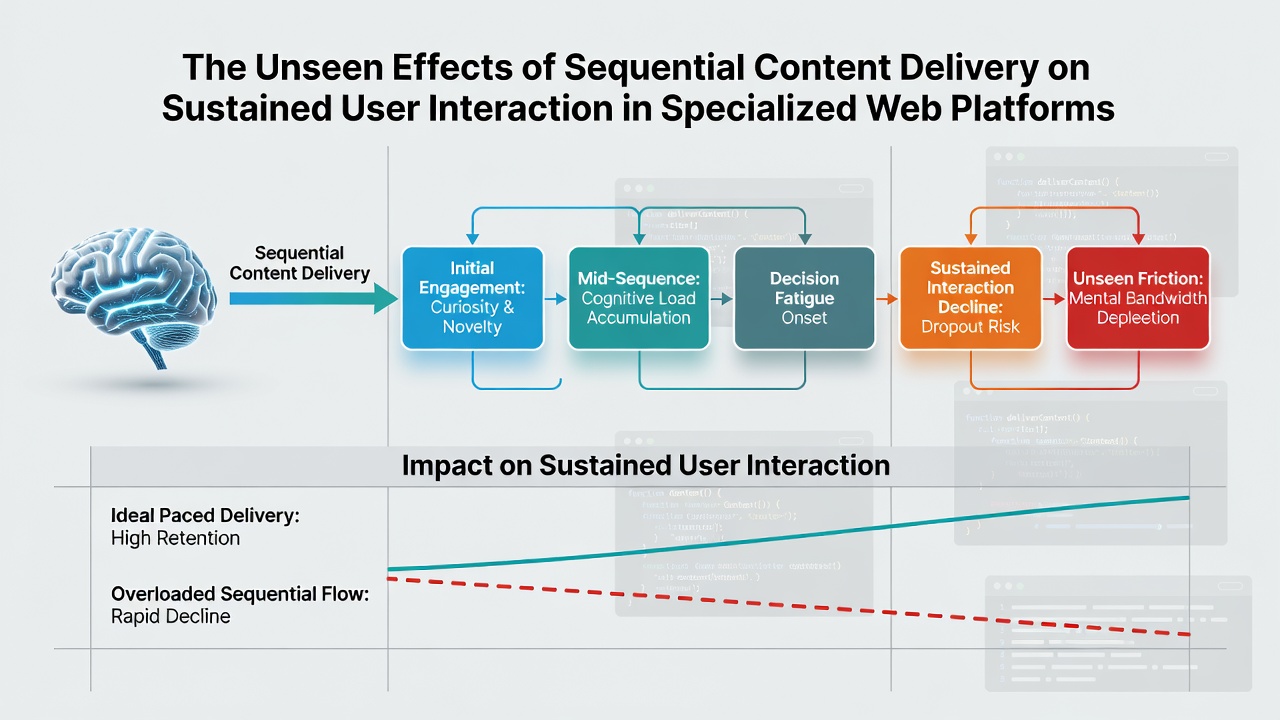
Yet the same datasets highlight variability: some user segments responded to notifications with immediate engagement while others deferred interaction until multiple segments accumulated. Platform logs from 2025 and early 2026 capture these differences without attributing them to specific design choices alone.
Comparative Observations Across Platform Types
Specialized platforms in technical fields and academic support networks display distinct response profiles to sequential delivery compared with broader social communities. In technical environments, users often revisited completed sections while new material remained locked, extending total time spent per sequence. Reports from research groups affiliated with Canadian universities noted similar patterns in health information portals, where sequential modules encouraged cross-referencing of earlier content. Australian industry analyses of professional learning sites echoed these observations, linking release timing to aggregate session counts rather than individual preferences.
External sources provide additional context. According to findings published by Pew Research Center, structured content access correlates with prolonged platform loyalty across multiple demographic groups. Separate work from the European Commission's digital economy monitoring unit tracks how timing mechanisms affect interaction density in regulated information environments, offering comparative statistics across member states.
Conclusion
Sequential content delivery continues to shape interaction metrics on specialized web platforms through its influence on return timing, session layering, and notification response. Ongoing data collection in 2026 supplies platforms with granular records that inform release scheduling decisions, while academic and governmental reports supply broader benchmarks for comparison. These patterns remain observable across diverse topic areas and geographic regions, supported by analytics systems that log user progression without requiring subjective interpretation.