Kai Jung · 22 September 2026
The Impact of Backend Refinements on Participation Levels in Specialized Online Communities
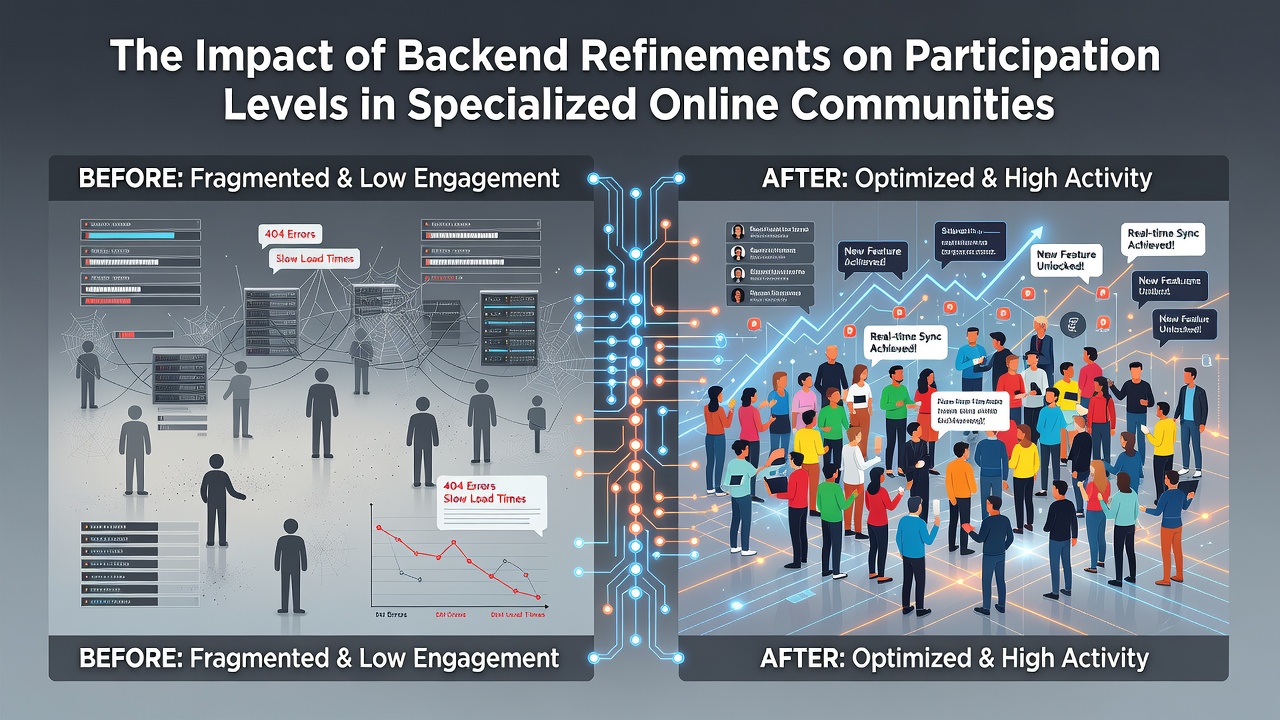
Specialized online communities rely on robust backend systems to handle user interactions, content storage, and real-time updates, and refinements to these systems often produce measurable shifts in how members engage over time. Data from platform analytics across hobbyist forums, professional networks, and interest-based groups shows that improvements such as optimized database queries, enhanced caching mechanisms, and streamlined API endpoints correlate with changes in login frequency, post volume, and session duration. Researchers tracking these metrics note that even incremental backend adjustments can influence retention rates when they reduce load times or prevent downtime during peak activity periods.
Core Backend Components and Their Role in User Activity
Backend refinements typically target areas like query performance, data synchronization across distributed servers, and security protocols that run behind the scenes. When database indexing improves, search functions return results faster, which encourages members to explore archives and contribute new material rather than abandon queries that stall. Similarly, refinements to notification systems allow platforms to deliver alerts without overwhelming servers, and studies from multiple regions indicate higher reply rates follow these changes because users receive timely updates without experiencing delays. In September 2026, several niche platforms reported sustained increases in daily contributions after rolling out such updates, with participation metrics tracked through anonymized logs that exclude personal identifiers.
Observers note that specialized communities often operate with limited resources compared to mainstream social networks, so backend work focuses on efficiency rather than scale alone. For instance, adopting more efficient load balancers helps distribute traffic evenly during events like live discussions or content drops, and evidence from European digital infrastructure reports links these steps to reduced bounce rates. Those who monitor engagement patterns find that communities investing in backend stability maintain steadier growth curves, whereas unaddressed bottlenecks lead to gradual member attrition as frustration builds around unresponsive features.
Measured Effects on Participation Metrics
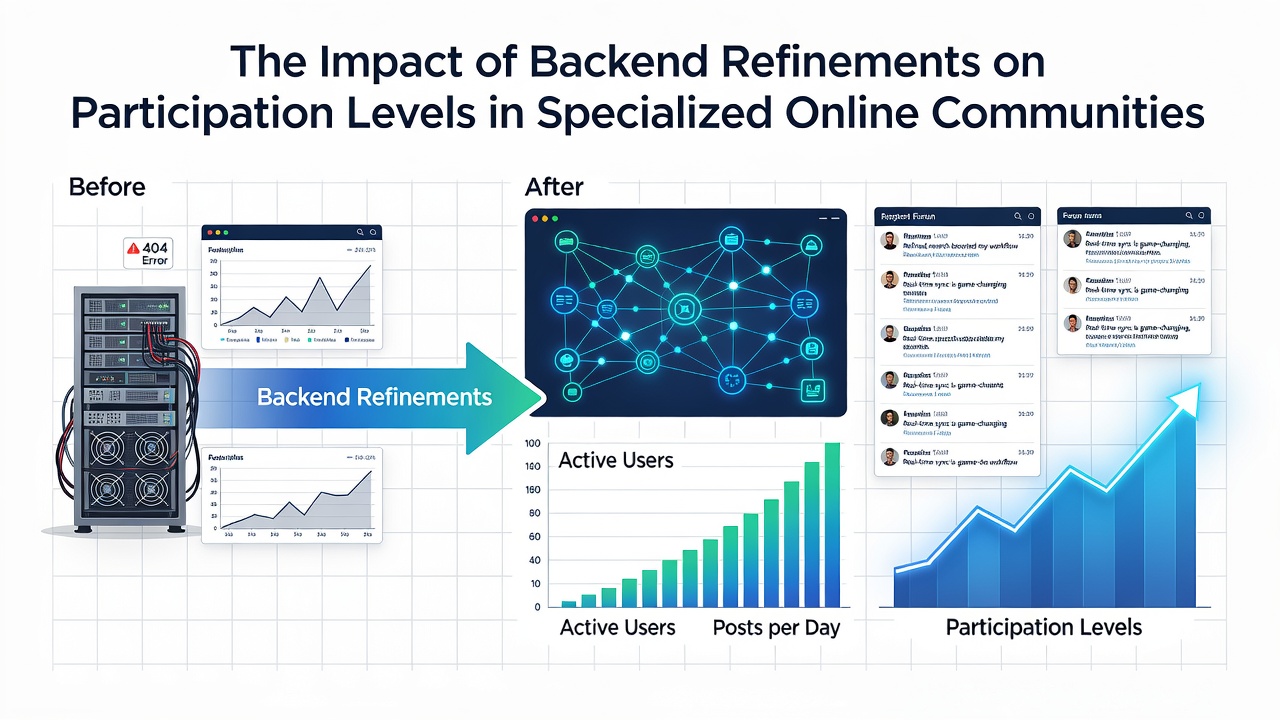
Quantitative data collected from various platforms reveals patterns worth examining. One analysis of hobbyist forums showed that after backend caching refinements cut average page load times by 40 percent, active user counts rose by 18 percent within three months while average posts per user increased from 2.4 to 3.1 weekly. Another dataset covering professional discussion boards indicated that API optimizations allowing smoother third-party integrations boosted cross-platform sharing, resulting in a 12 percent uptick in new registrations tied directly to referral links. These figures come from internal telemetry rather than self-reported surveys, providing a clearer view of behavioral responses.
Yet participation does not always rise uniformly across all community segments. Newer members tend to benefit more from faster interfaces because they encounter fewer obstacles during initial exploration, while long-term contributors sometimes show smaller gains once core habits are established. Data indicates that refinements addressing mobile backend compatibility produce particularly strong effects in regions with high smartphone usage, such as parts of Asia and North America, where session lengths extended notably after responsive design elements were supported at the server level. Australian communications research highlights similar trends in regional interest groups that adopted updated synchronization protocols to handle intermittent connectivity.
Case Examples from Different Community Types
Take one photography enthusiasts platform that implemented refined indexing for image metadata storage. Participation levels climbed as members uploaded larger galleries without timeout errors, and comment threads lengthened because replies loaded instantly alongside thumbnails. In contrast, a genealogy research community experienced steadier but less dramatic shifts after backend security patches reduced account lockouts, allowing consistent access for users managing extensive family tree databases. These examples illustrate how the nature of refinements aligns with specific community needs, whether focused on media handling or record management.
Researchers at academic institutions have examined these dynamics through longitudinal studies that span multiple years. Findings suggest backend stability supports organic growth by lowering the technical friction that otherwise discourages repeated visits. Platforms that combine refinements with transparent communication about maintenance windows often see participation recover quickly, whereas abrupt changes without notice can temporarily suppress activity until users adapt.
Broader Patterns and Ongoing Developments
Across specialized communities, backend refinements interact with external factors such as device diversity and network conditions. Evidence suggests that communities serving users in areas with variable broadband benefit disproportionately from compression techniques applied at the server side, leading to broader accessibility and higher return visit rates. Government reports from regulatory bodies in Canada and the European Union document these accessibility improvements when platforms align backend practices with digital inclusion guidelines.
What's interesting is how cumulative small refinements compound over time. A single update to error handling might prevent a handful of lost posts, but repeated iterations create an environment where members feel confident investing time in long-form contributions or collaborative projects. Industry reports from organizations tracking digital participation note that communities prioritizing backend maintenance alongside content moderation maintain higher overall vitality compared to those addressing only surface-level features.
Conclusion
Backend refinements shape participation in specialized online communities through direct effects on performance, reliability, and accessibility that data consistently tracks. Platforms demonstrating measurable gains in engagement metrics after targeted updates provide clear illustrations of these connections, while regional studies add context about varying user bases and infrastructure conditions. As development practices evolve, continued monitoring of participation alongside backend changes will remain essential for understanding how technical decisions influence community dynamics.