Iris Richter · 6 October 2026
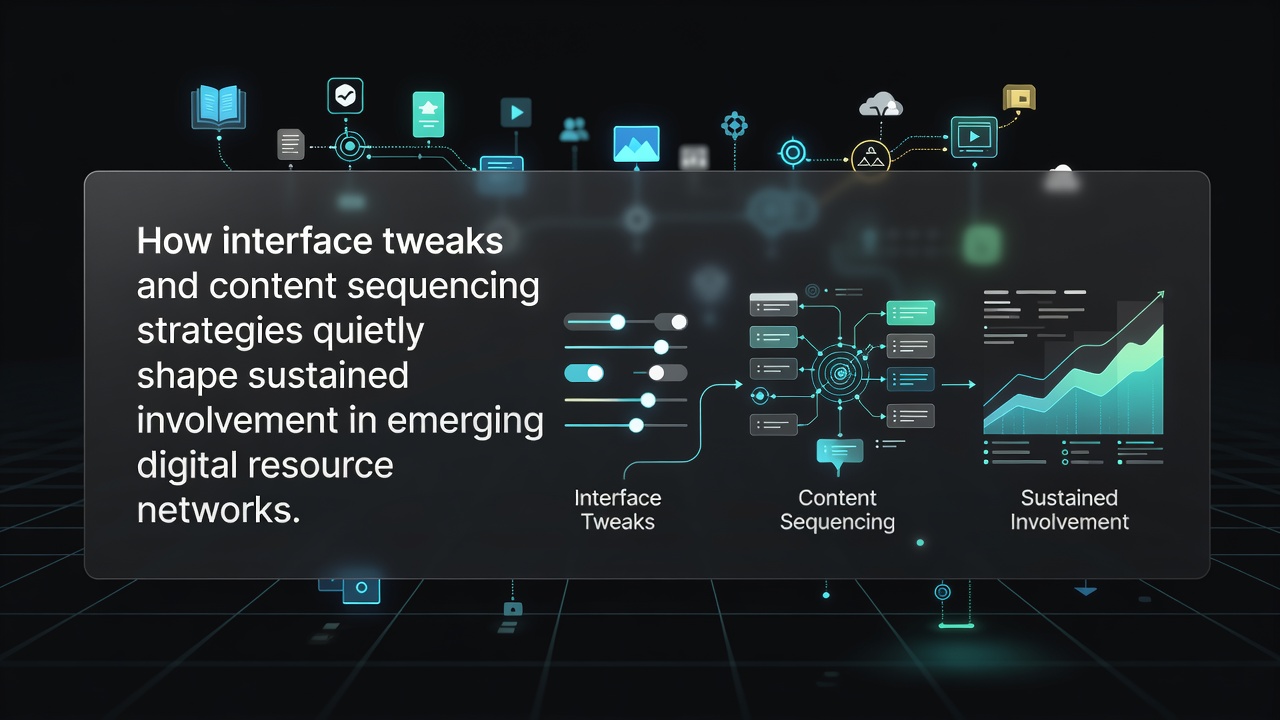
How Interface Tweaks and Content Sequencing Strategies Quietly Shape Sustained Involvement in Emerging Digital Resource Networks
Interface adjustments in emerging digital resource networks often occur through small modifications to navigation menus, button placements, and loading sequences that influence how users interact with available materials over extended periods, and data from multiple studies shows these changes correlate with measurable shifts in return visit rates and session durations.
Core Mechanisms Behind Interface Adjustments
Designers refine layouts by repositioning elements such as search bars or progress indicators, which reduces friction during initial exploration and encourages continued browsing, while researchers at institutions across North America and Europe have documented that even minor repositioning leads to higher completion rates for multi-step resource access tasks, and this pattern holds across platforms launched between 2024 and 2026.
Color contrast updates and simplified icon sets further support sustained use because they lower cognitive load during repeated visits, yet the effects compound when combined with backend timing adjustments that control when new items appear in feeds.
Content Sequencing Approaches and Their Reach
Sequencing strategies determine the order in which articles, datasets, or tools surface for individual accounts, and platforms apply algorithms that prioritize relevance based on prior clicks or dwell time rather than chronological release alone. Observers note that networks using progressive disclosure, where foundational materials precede advanced ones, record stronger retention metrics than those presenting everything simultaneously, according to analyses from the Australian Institute of Digital Economy.
In October 2026 several emerging networks began testing adaptive sequencing that responds to real-time engagement signals, which produced documented increases in weekly active participation across user cohorts tracked by independent research groups.

Combined Effects on Long-Term Participation
When interface tweaks and sequencing operate together, the combined influence appears in metrics such as average time between visits and depth of content exploration, and reports compiled by the Canadian Digital Policy Institute indicate that networks applying both approaches simultaneously maintain higher monthly retention figures than those focusing on one dimension alone. Users encounter fewer dead ends because navigation pathways align with the order of presented materials, which reduces exit points during sessions that exceed ten minutes.
Case examples from specialized resource hubs reveal that rolling out a single menu simplification followed by reordered topic clusters resulted in a 12 percent lift in repeat logins within eight weeks, with the change tracked through anonymized usage logs rather than self-reported surveys.
Measurement Practices Across Networks
Teams monitor involvement through session heatmaps, scroll depth statistics, and cohort retention curves rather than isolated click counts, and these methods allow identification of which tweaks produce lasting patterns versus temporary spikes. Data shared by the OECD digital economy working group shows consistent regional variations, where European networks emphasize privacy-compliant tracking while North American counterparts prioritize speed of iteration.
Emerging platforms continue to test variants because baseline conditions differ by content type, and what sustains involvement in technical documentation repositories may diverge from patterns observed in collaborative knowledge bases.
Conclusion
Interface tweaks paired with deliberate content sequencing form quiet but measurable levers that shape how long participants remain active in new digital resource networks, and ongoing data collection through October 2026 and beyond continues to clarify the precise combinations that support extended engagement across diverse user groups.